Thursday, October 21, 2010

Blogging System for the Win

Wouldn't you just love it if you could enter a classroom every day knowing that you would not have to write one single paper with a pen for an entire quarter? Yeah, that's what I thought. I absolutely hate writing essays and speeches. So Mr. Meechin's idea to assign blog posts every week was genius. He'd give us numerous questions per week that pertained to what we were learning in class. Having options like that was great because if there was a question that I didn't like or one that I felt I couldn't answer adequately, I didn't have to answer it. He gave us a set number of blogs that we needed to have done by the end of the quarter, which meant  there was a specific number of blogs we should average each week by the end of the day Friday. It was a simple concept that made our high school lives less stressful. We also had the opportunity to view our classmates' blogs, share ideas, and search the web for information and pictures.

Posting blogs online is much more organized than turning in papers and grading them. Mr. Meechin doesn't have to sit at his desk with a whole stack of papers, like other teachers, trying to grade them all in time. He can just read our blogs off the web and grade them then and there just like that.

Although I do prefer typing blogs posts over writing with pen and paper, I do not enjoy writing weekly articles. I tend to have a hard time trying to find all the words to get in 600-1000 words.
I wish we had more options to choose from instead of just one.

Overall, I think Mr. Meechin's way of teaching is really great. Writing blogs is a new way of learning for me and I've benefited from it a lot. I definitely love it a lot more than writing with a pen and paper. If I was given daily homework to do, I wouldn't want to do it, but since I'm given a week to write on average three blog posts, I'll do it no problem.

Don't listen to Hollywood


When you think of western cowboys, what do you think of? I know that I think of John Wayne and the roles he played in Saturday morning westerns, handsome, rugged, rough around the edges rebel-like cowboys drinking till they're drunk and hitting on pretty women, bar fights, Indian fights, and shootouts in the street. Cowboys seemed to have a pretty daring and adventurous way of living. We're  given that idea because Hollywood has glorified the lifestyle of western cowboys a tremendous amount. The old saying, "a picture is worth a thousand words," pertains to Erwin E. Smith's cowboy collection perfectly. Smith's photography captured the true life led by western cowboys in the 1800s.
 
Cowboys had one of the hardest, if not the hardest job of their time. Most often, the men who chose to be cowboys were young and single. They traveled from country side to country side and from town to town either in small groups or all alone herding their cattle, breaking in horses, and tending to other daily activities. Not only that, they worked long days and nights, which meant they had to be determined, trustworthy, dedicated, and hard-working to pull through.
 
There were no public restrooms, no beds to sleep on, doctors were almost always faraway, they barely saw their families, and where they would sleep was not always known. Weather and terrain were obstacles, as well. The hot sun, dry climates in some areas, thunderstorms, mountains, rivers, and cold winter months. Due to the environment that they lived in, cowboys were more susceptible to diseases and they chewed tobacco. Ew! 

Even though Hollywood glorified the lifestyle of cowboys, they did get one thing right. The dress code. Cowboys are most often seen wearing long pants or jeans, a cowboy hat, boots, chaps, a bandanna, a plaid shirt, sometimes a vest, and a gun belt around their waste. Way to go Hollywood! Wait a minute, Hollywood got two things right. Horses were the main transportation for cowboys because they could get around quickly and efficiently. There's no way they'd be able to do everything on foot. 

Whenever you watch old westerns on Saturday morning, just remember that Hollywood doesn't always get it right. Cowboys weren't exactly what they were cracked up to be. They were much more.


Image Source: "Erwin E. Smith Collection Guide | Collection Guide." Amon Carter Museum | An American Collection | Fort Worth, Texas. Web. 22 Oct. 2010. <http://www.cartermuseum.org/collections/smith/collection.php?asn=LC-S59-124&mcat=3&scat=41>.

Way Better than Pen & Paper

When compared to writing just pen and paper, of course blogging is different. I love it so much more. We have different options for writing, we're able to view our classmates' blogs, share our ideas, and do research on the web. All of my other classes are pen and paper based and I get tired of it after a while, especially my hand. I like how we're given a week to do the entire assignment. It works well with our busy high school lives and I can still go on facebook at the same time :P

My favorite (:

My favorite blogging topic from the first quarter was definitely week six titled, "Moving West." Moving West was my favorite because every student was actually excited to do this assignment and that says a lot when students actually want to do it. We were able to learn in a different way. We got to watch TV, play a game, listen to music, and even write a six word story. Who wouldn't want to do that? We're teenagers.

Arriving in America

Immigrants that arrived at Ellis Island were probably very relieved that they had made it safely to America. Most immigrants were poor and had to travel in the steerage section of a ship, which provided miserable conditions for a few weeks. The steerage was airless, hot, and smelly. Not only that, but in such a small space, diseases spread quickly. So, if you were lucky, you didn't get sick. Due to the conditions on the ship, I'm sure all immigrants were very happy to leave the steerage, breathe in fresh air, and walk around in open space. Additionally, they were starting a fresh new life for themselves and their families. However, they were new to the country and did not know the language at all, which probably added intimidation and fear to their happiness. Overall, there was a large mix of emotions for the immigrants arriving at Ellis Island.

Song of the Shirt

The workers who worked in textile factories during the second industrial revolution, worked under very harsh conditions that are unimaginable in today's society. Worker health and safety regulations were non-existent. Therefore, there were no limits on how the workers were treated. The song, "Song of the Shirt," depicts the lives of women who worked in the textile factories. They sung these songs to protest against their work conditions and to just get through the day. They worked in dangerous and unhealthy environments from sunrise to sunset and were underpaid. The long hours they worked left them with their eyes  heavy and red and their fingers all weary and worn. In addition to working at the textile factories for long hours, women had to go home and tend to their families. They were worn out, but they had no choice but to continue working because they needed to make a living. From all this hard work, it got to the point where the workers were no longer afraid of death.

Sunday, October 10, 2010

Reconstruction and the Civil Rights Movement

The idea that everything for African Americans was completely perfect during the Reconstruction Era is completely false. Even after the end of the Civil War in 1865 and the passing of the thirteenth, fourteenth, and fifteenth amendments, African Americans still had fewer rights than white people.

In 1865, the 13th amendment was granted, which abolished slavery throughout the United States. Three years later, the 14th amendment was granted, which guaranteed the rights and security of the freed people. Lastly, the 15th amendment was ratified in 1870, which prohibited the government from denying a citizen the right to vote based on that citizen's race, color, or previous condition of servitude. Not everyone agreed with these amendments. Therefore, southern states decided to find a loophole through the 10th amendment, which states, "The powers not delegated to the United States by the Constitution, nor prohibited by it to the States, are reserved to the States respectively, or to the people." From this, the "black codes" were issued. The black codes were intended to keep blacks in a state similar to slavery. The codes from state to state varied, but some restrictions included: limiting their right to vote, limiting their right to buy property, preventing them from sitting in juries, and limiting their right to testify against white men. So African Americans were given rights, but in a sense, those rights were taken away in some way.

Due to the black codes, slaves were put into an unjust and troublesome position. They had to make a living somehow. Therefore, sharecropping began. Sharecropping was when freed slaves had the opportunity to remain on their former master's plantation. They were given a plot of land and were allowed to farm. However, about half of what they harvested had to be given to their masters. Not only that, they had to pay for tools and themselves. This caused them to make barely any money and put them into debt. Sharecropping was a way for the white men to keep a control over the black men's freedoms.

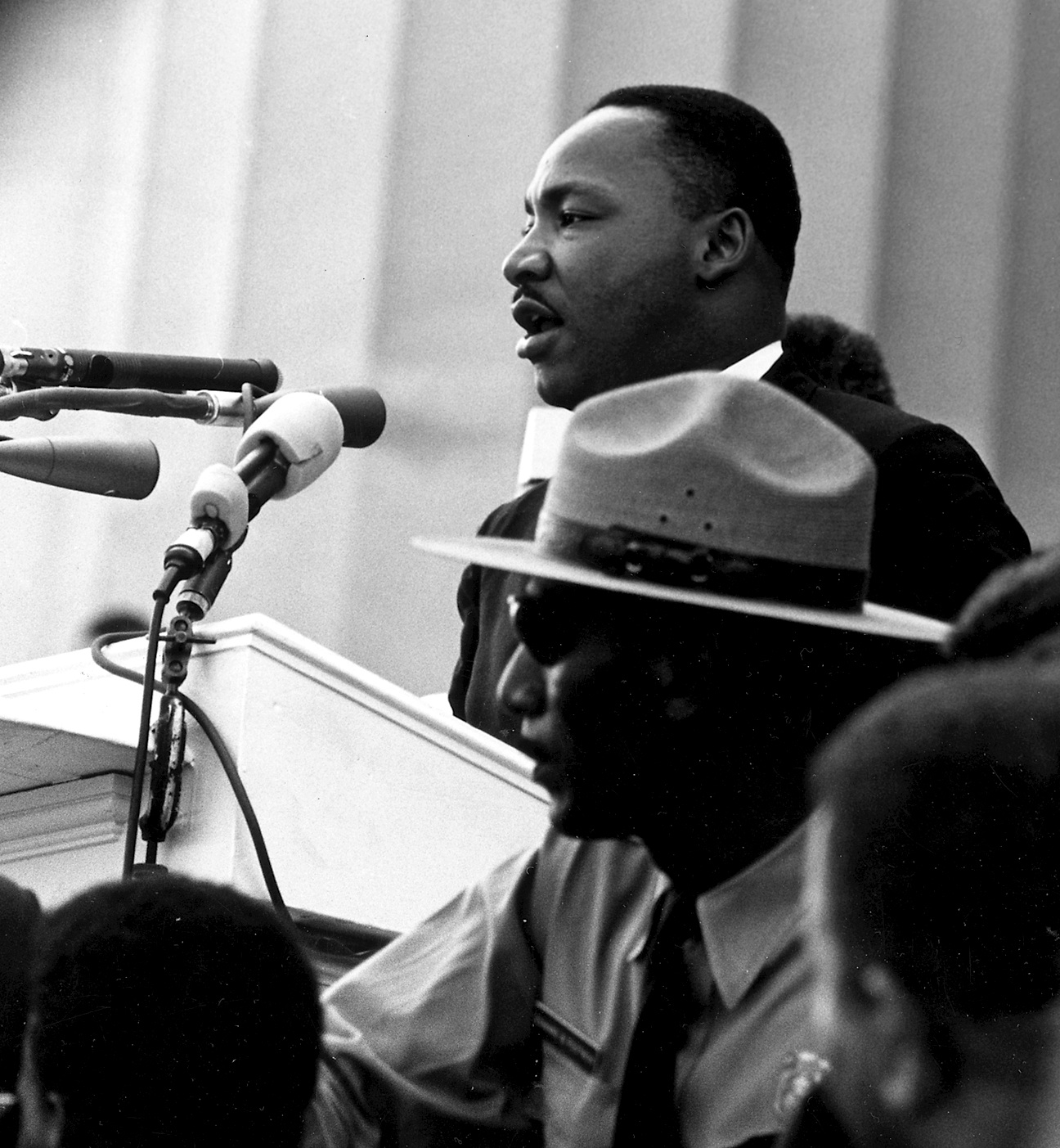
By 1955, the Civil Rights Movement began and lasted thirteen years. Thirteen years for African Americans to gain equal rights and to not have them taken away. Throughout these thirteen years, African Americans were still highly discriminated against. They were still restricted from voting and witnessed and experienced many vicious crimes. In addition to that, segregation was a big problem. Everything that was a part of the public was segregated. There were white schools, black schools, white water fountains, black water fountains, white benches, black benches, white restaurants, black restaurants, etc. In addition to that, white people were given better quality schools, equipment, everything. It wasn't fair. The Ku Klux Klan, a.k.a. the KKK, planned scare tactics to keep African Americans from fighting for their rights. Many of those scare tactics worked. However, there were African Americans who were not afraid, such as Martin Luther King Jr. and Rosa Parks.

During Reconstruction, African Americans may not have fought as hard for their freedoms, but when it came time for the Civil Rights Movement, they pushed the limit and kept fighting. All-in-all, African Americans fought for over a hundred years for their equal rights. They stood up and proved to the white society that they are human beings and should be treated equal.


Sources:
Martin_Luther_King_-_March_on_Washington.jpg‎
1966, By. "African-American Civil Rights Movement (1955รข€“1968)." Wikipedia, the Free Encyclopedia. Web. 11 Oct. 2010. <http://en.wikipedia.org/wiki/African-American_Civil_Rights_Movement_(1955–1968)>.

Saturday, October 2, 2010

An Alternative to a Lecture

Can gaming be educational? Believe it or not, it can be. Students want to have a way to learn that interests them and gaming is that solution. You just have to find the right games. For example, Oregon Trail. This game steps back into history to teach students about the realities of pioneer life on the Oregon Trail. In this game, students take on the role of a wagon leader that is guiding his/her group of settlers from Independence, Missouri, to Oregon's Willamette Valley. It's actually pretty hard to beat. You really have to think and make the right choices before you leave, such as your occupation, what time of the year to leave, and what to buy and how much to buy of it. Not only that, but you also have to make the right choices along the way, such as when to stop and rest, when to hunt, what to trade, who to talk to, etc. The first time I played, I died halfway through. However, I was learning and having fun at the same time. Therefore, gaming can be educational because you're visually learning.

Friday, October 1, 2010

Six Word Story

Oregon trail life; hardships and bravery.

Slave Education

I'm sure many African Americans would have loved to have been educated while they were in slavery, but their situation didn't allow them to be educated. They weren't allowed to read or write. Therefore, they had to find ways to learn on their own, such as learning in secret from previously educated slaves. If they were caught in doing so, I'm sure they were punished in some way.They were oppressed. Even after slavery, they still faced roadblocks. Yes, there were schools, but schools were segregated. Blacks schools were not as nice as white schools and they were still discriminated against. It took a long time for African Americans to live life normally and happily like white people.